

Short-cycling — turning on and off in quick bursts — usually means your furnace or AC is protecting itself. The common causes are restricted airflow (a clogged filter or undersized ducts) tripping a safety, a dirty flame sensor, an oversized system that satisfies the thermostat too fast, or a venting problem. It wastes energy and wears out the equipment, so it's worth fixing the cause. Anderson finds it by measuring static pressure, airflow, and temperature rise — not by swapping parts and hoping.
What short-cycling actually is
A healthy HVAC system runs steady cycles — long enough to heat or cool the house evenly and, in cooling, to pull humidity out. Short-cycling is the opposite: the system fires up, runs for a minute or two, shuts off, and repeats. With a furnace, that's almost always a safety doing its job — the unit is overheating or can't confirm a flame, so it shuts the burner down to protect itself and your home.
The common causes, in order
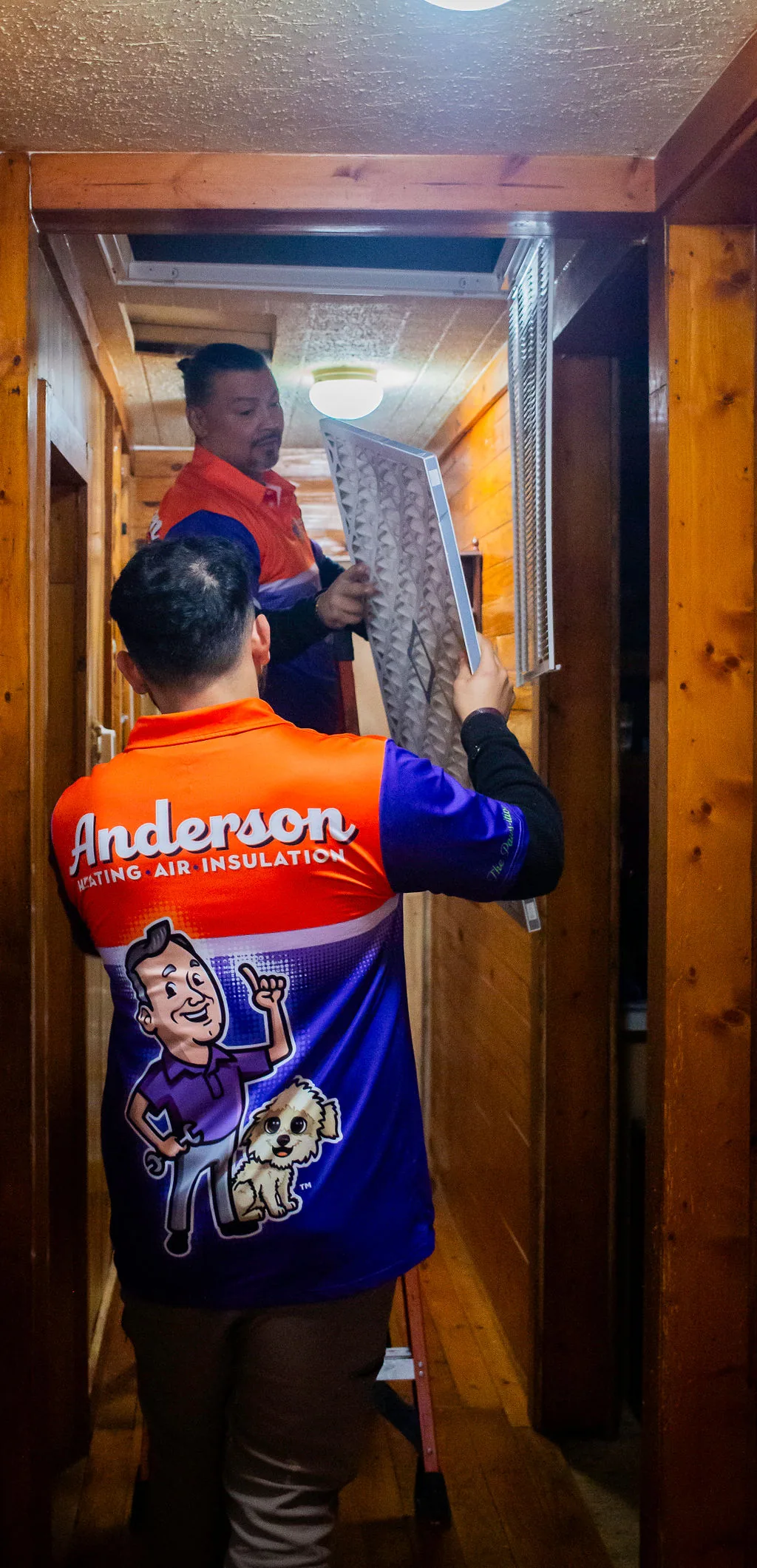
- Restricted airflow. A clogged filter or undersized/leaky ducts choke the airflow. The furnace overheats and trips its high-limit safety; the AC's coil can freeze. This is the most common cause and the cheapest to start checking.
- Dirty flame sensor (furnaces). A sooty flame sensor can't prove the flame, so the furnace shuts the burner off seconds after lighting — a textbook short-cycle, and a cheap fix.
- Oversized equipment. A furnace or AC that's too big for the home satisfies the thermostat in minutes and shuts off, again and again. The real fix here is sizing, not a part.
- Flue or venting problems. A blocked or improperly drafting flue can trip safeties and stop the burner.
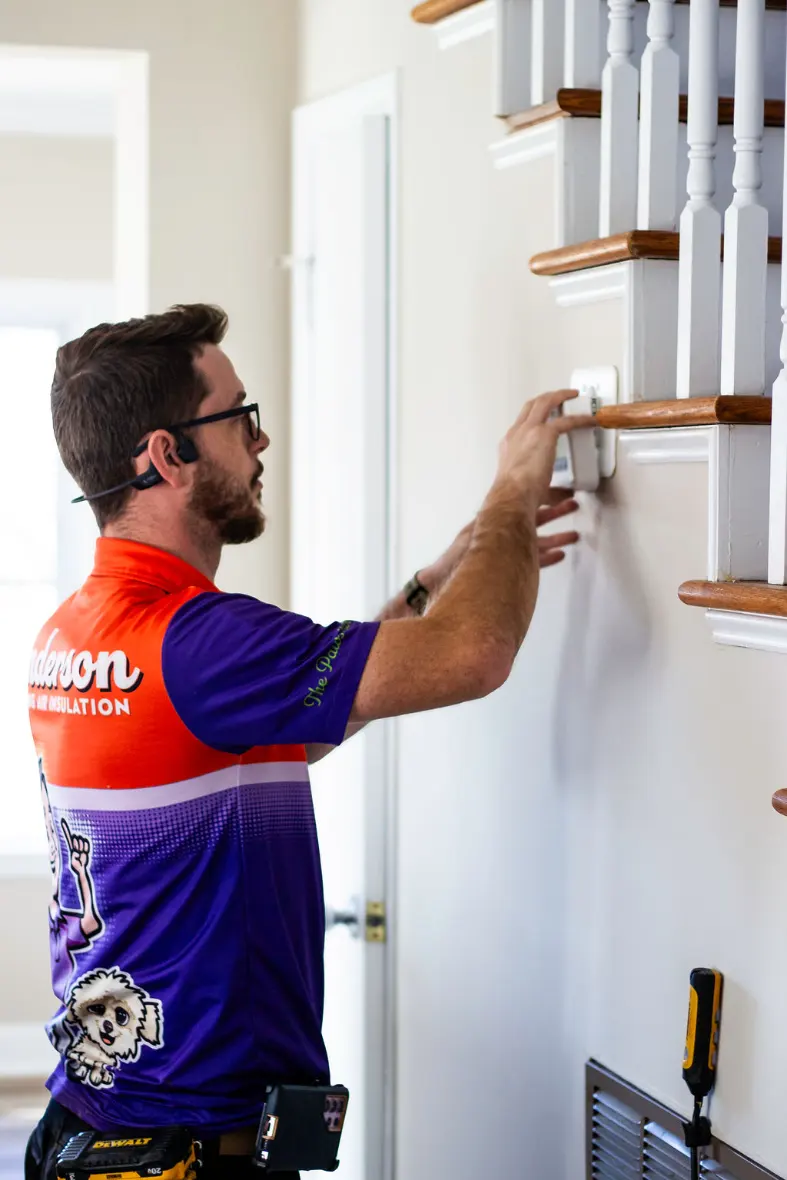
- Thermostat issues or location. A failing thermostat, or one mounted near a supply register, can cycle the system rapidly.
Why short-cycling is worth fixing now
Every start is the hardest moment in an HVAC system's life — the most current draw, the most stress on the parts. A system that short-cycles is repeating that stressful start endlessly, which shortens the life of the compressor or furnace, wastes energy, and leaves rooms unevenly comfortable. It's also a symptom: something upstream — airflow, a failing part, or oversizing — is wrong. Ignoring it usually means a bigger repair later.
Why Anderson measures the cause
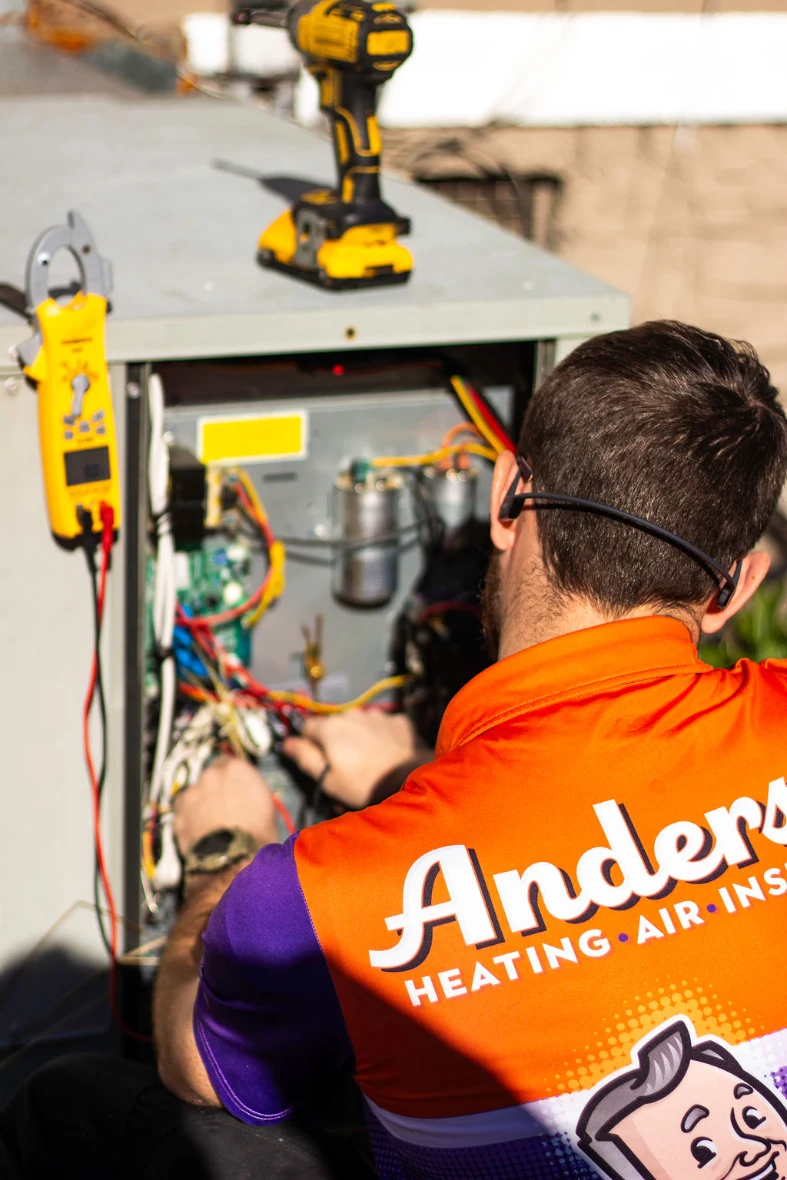
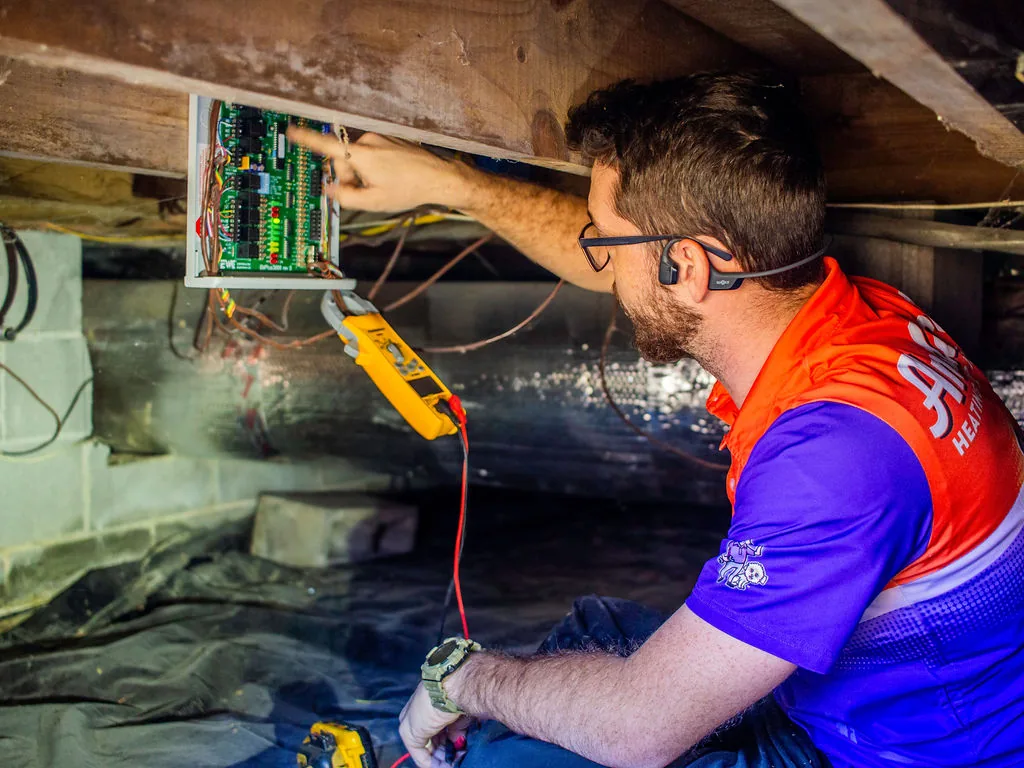
It's tempting to throw parts at short-cycling — a new thermostat, a new flame sensor — and hope. We don't work that way. Anderson is a building-science company with six blower doors and six duct blasters. We measure static pressure and airflow to catch restricted or undersized ducts, measure temperature rise to see if the furnace is overheating, inspect the flame sensor and burner, and check the venting. That tells us whether the problem is the filter, the ducts, the equipment size, or the home itself — so we fix the actual cause once, instead of replacing parts one at a time.