

The building-science truth: why a coil freezes in July
The indoor (evaporator) coil is where your AC pulls heat out of the house. To do that, it runs cold — and humid Calhoun air condenses on it, the way a glass of iced tea sweats on a porch. Normally that water drains away. But if the coil gets too cold and stays there, the condensation freezes instead of draining. Frost builds, which blocks the very airflow that was keeping the coil warm enough — so it gets colder still, and the whole thing snowballs into a block of ice. Ironically, the colder the coil looks, the less cooling you're actually getting.
There are really only two root causes, and a good technician's job is to tell them apart:
- Not enough airflow across the coil. A dirty filter, a dust-loaded blower wheel, closed registers, or undersized/leaky return ducts all starve the coil of the warm air it needs. This is the most common cause — and in older Calhoun homes with retrofitted ductwork, restricted returns are a frequent culprit.
- Low refrigerant charge. Refrigerant carries the heat. When a slow leak drops the charge, the coil's pressure and temperature fall below freezing even with good airflow. Topping it off without finding the leak guarantees it ices again later.
What to do right now (and what not to do)
Turn the cooling off and let it thaw. Running an iced system can pull liquid refrigerant back to the compressor — the single most expensive part to replace. Switch the thermostat to fan only to speed the thaw and dry the coil, and replace a dirty filter. What you should not do is melt the ice and immediately run it hard again: the airflow or charge problem is still there, and it will freeze right back. The ice is information — it's telling you to measure the cause.
Why this is a Calhoun problem specifically
Our Oostanaula-valley humidity means coils have a lot of moisture to condense, so a marginal airflow or charge problem ices faster here than in a dry climate. Combine that with the older building stock around Gordon County — homes where ducts were added later, returns are undersized, and filters get forgotten through a long cooling season — and frozen coils are one of the calls we see most through July and August.
How Anderson finds the real cause — and why that's rare here
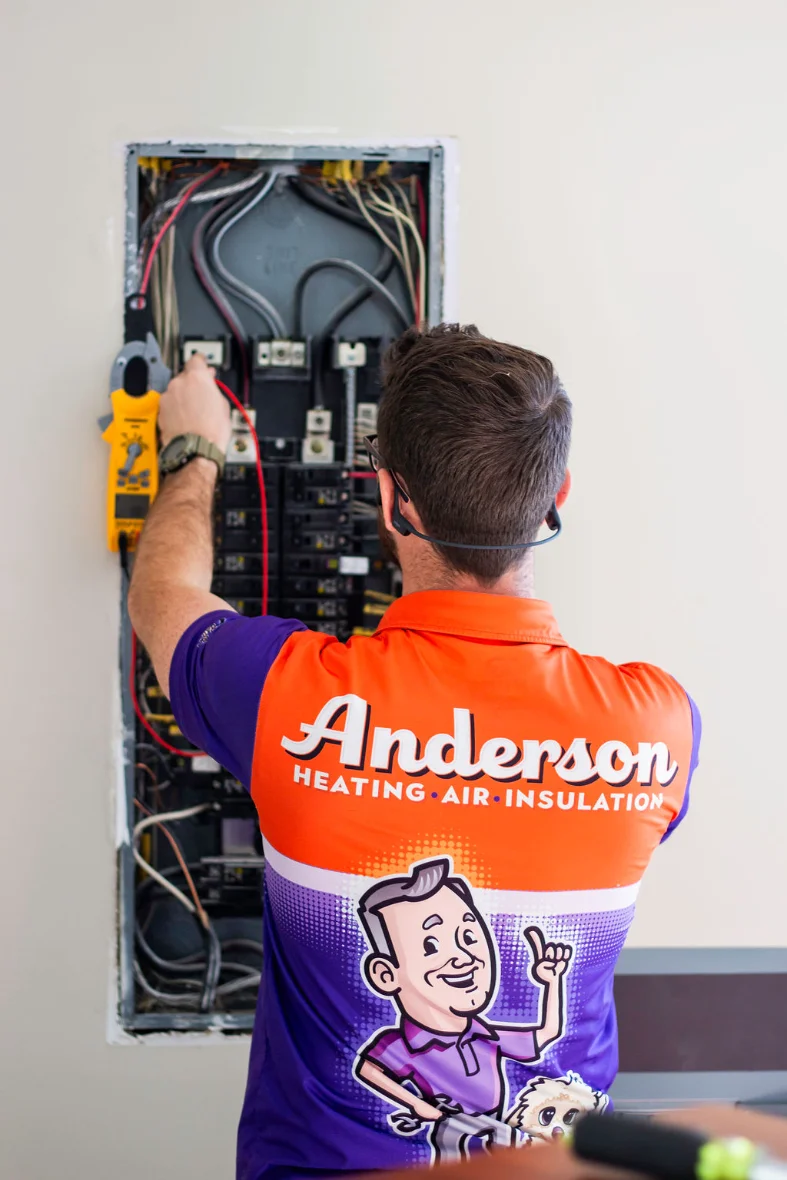
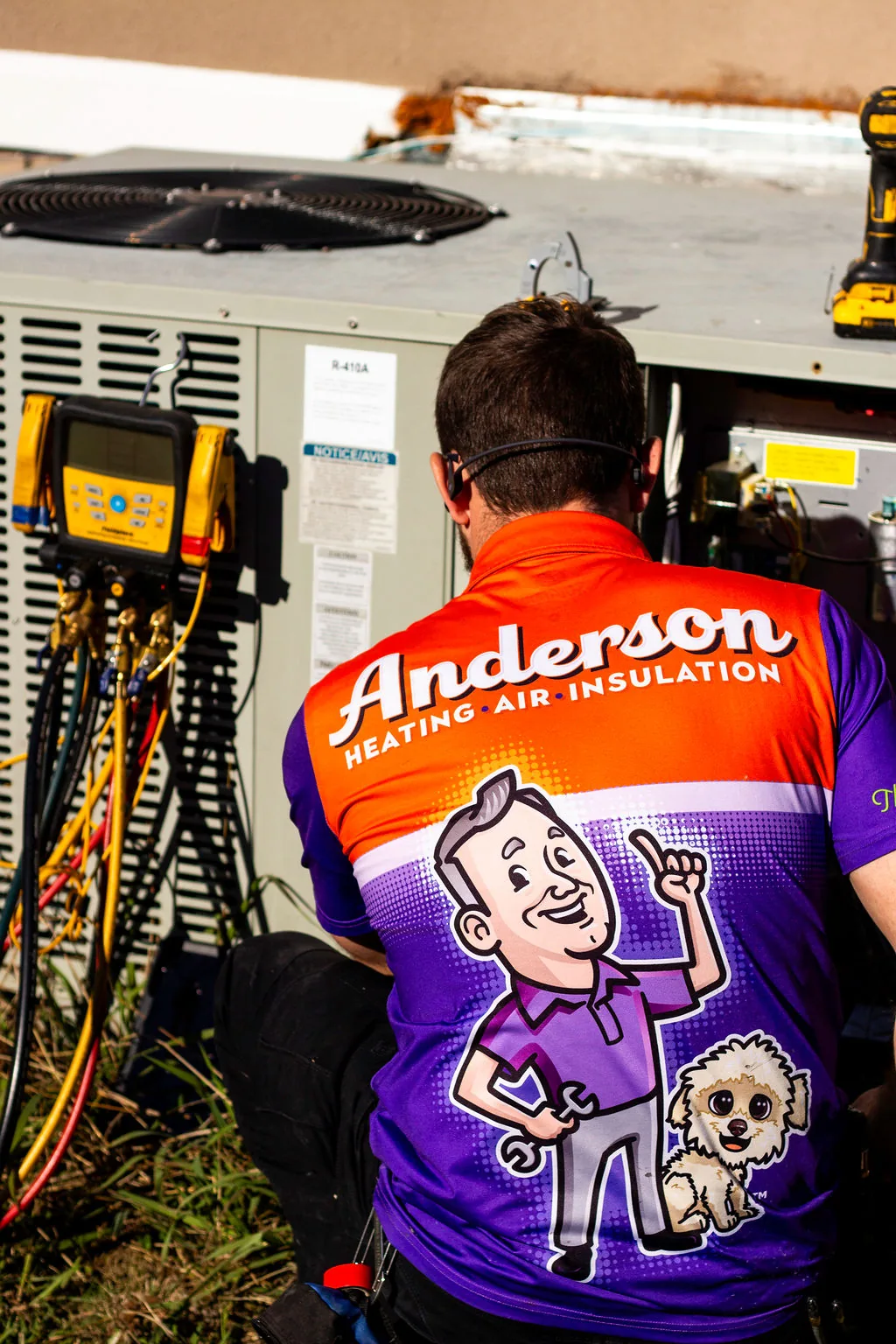
Anderson is a building-science company: we diagnose the home as a system. Because the cause of a frozen coil is almost always airflow or charge, we measure both instead of guessing. We check the filter and blower, measure static pressure and airflow, and — because Anderson runs six duct blasters — we can actually quantify whether leaky or undersized ducts are starving the coil. Most HVAC shops in this area own zero of these tools and can only eyeball the equipment.
That's also why we repair first and replace only when the numbers say so. A frozen coil rarely means you need a new system — it usually means a filter, a blower, a duct restriction, or a leak to seal. Founder John Anderson built the company around owning the whole-home result, not just swapping the box, and that honest-repair-first standard is still how we work.