


A good AC unit installation should give you years of quiet, reliable cooling, yet the mistakes that lead to early repairs are usually made long before the system ever breaks down. The tricky part is that they hide.
The house cools on day one, everyone is happy, and the trouble only surfaces seasons later when a part fails ahead of its time. The clearest way to understand where installs go wrong is to follow the job from start to finish, because each stage carries its own traps. Walking it in order also makes it easier to spot which corner a low bid is quietly cutting. Here is how the errors creep in, step by step.
Before the Job: Sizing Decided by Guesswork
Almost every troubled AC unit installation traces back to a decision made before any equipment arrives, namely the size of the system. A proper job opens with a load calculation, sometimes called a Manual J, that weighs your square footage, insulation, windows, orientation, and ductwork.
Skip it and the crew tends to reuse whatever was there before, which may have been wrong for years. Too big and the system short-cycles, wearing itself out and leaving the air damp. Too small and it runs nonstop and still falls behind on the hottest afternoons. Neither extreme can be undone later without real expense, which is why the measurement up front matters so much. Our guide on how to size an air conditioner shows why that opening step decides so much of what comes after it.
During the Job: Problems Sealed Inside the Walls
Once the work starts, the costliest errors are the ones you cannot see afterward. Ductwork gets reused even when it leaks into a hot attic, and a careful crew tests and seals it instead of trusting it. In older homes around Dalton, that original ductwork is frequently undersized to begin with, so a new system never reaches the airflow it was built for.
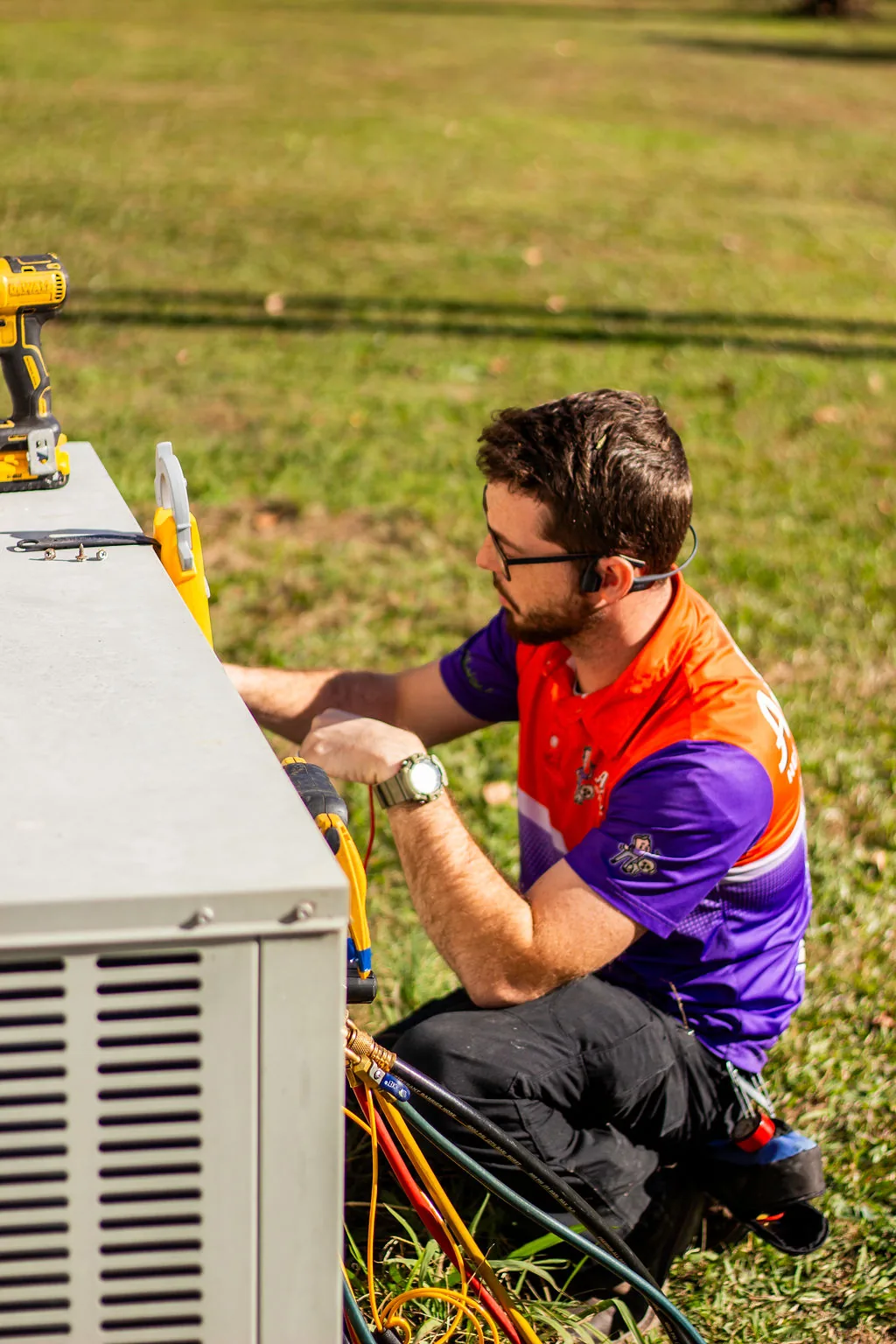
The refrigerant charge has to be measured against the manufacturer spec, not topped off by feel, because too much or too little strains the compressor and drags down efficiency. A clean line set and a tight electrical hookup belong to this stage too, and each one is easy to rush when a crew is behind schedule. Placement and drainage matter as well, since a unit crammed against a wall runs hot and a poorly routed condensate line invites water damage. ENERGY STAR's guide to HVAC quality installation paints a clear picture of what a clean setup should include, and our breakdown on why duct leaks waste your money shows how much a single skipped step can cost.
The questions that surface a careful crew:
Ask whether they run a load calculation, test and seal the ductwork, pull permits, and measure the refrigerant charge before they leave. A thorough installer welcomes those questions — a rushed one changes the subject.
After the Crew Leaves: How the Mistakes Show Up
A flawed AC unit installation rarely fails in the first week. Instead it surfaces as creeping bills, uneven rooms, a system that cycles too often, or a compressor that quits years early, and by then the link back to the original work is easy to miss. A sloppy job can also create warranty issues, since most manufacturers require proof of proper setup and registration.
That leaves you paying out of pocket for a failure that was never your fault. In a Rome summer, that early breakdown tends to land on the hottest day, when help is hardest to book. Seeing the AC repair cost of common failures makes the value of doing it right the first time obvious.
Vetting an Installer Before You Sign
The good news is that every trap above is avoidable, and the right questions surface a careful crew quickly. Ask whether they run a load calculation, test the ductwork, pull permits, and measure the refrigerant charge before they leave. Ask for references and a written scope of work too, so the quote you compare covers the whole job rather than a stripped-down version of it.
When one bid sits far below the rest, ask what is missing, because that gap is usually the corners being cut. ENERGY STAR's maintenance checklist doubles as a guide to the conditions a good install should leave behind, and the signs to watch for help you judge whether an aging, poorly installed system is worth saving. Anderson Heating, Air & Insulation (formerly John Anderson Service Company) measures and tests on every job, serving homeowners in Calhoun and the surrounding towns since 1978.
And if a high-efficiency system is on the table, ask our BPI-certified team what current utility rebates might apply, or see our Georgia Power HVAC rebates guide.
Want an Install Done Right the First Time?
We run the load calculation, test the ductwork, and verify the charge before we leave — the steps that keep a new system running for years.