


A heat pump is a system you diagnose with instruments, not guesses. But a few minutes of looking can tell you whether what you're seeing is normal.
What's normal for a heat pump
A heat pump moves heat instead of burning fuel. In winter it pulls heat out of the cold outdoor air and brings it inside, so the air at the vents feels milder than a gas furnace's even when everything is working. Three things homeowners often mistake for a breakdown are normal:
- Air that feels lukewarm, not hot. That's how a heat pump heats.
- A few minutes of cool air. When frost builds on the outdoor coil, the unit runs a defrost cycle to melt it. You may see steam outside and feel cooler air inside for a few minutes.
- Light frost on the outdoor unit in cold, damp weather. The defrost cycle clears it.
What isn't normal
- Truly cold air for long stretches. Usually a low charge, a stuck reversing valve, a long or stuck defrost cycle, or auxiliary heat not engaging.
- An outdoor unit encased in solid ice, or one that never defrosts. Causes range from a failed defrost control or sensor to a low charge, restricted airflow, or poor drainage at the base.
- Stuck in cooling in winter. The reversing valve that switches a heat pump between heating and cooling can stick, or a thermostat setting can keep it from switching to heat.
- A system that can't keep up on a cold night. Usually low on charge, starved by leaky or undersized ducts, or mis-sized: all measurable.
Aux heat and emergency heat: what the thermostat is telling you
Most heat pumps have auxiliary heat strips for the coldest snaps. On many thermostats an Aux indicator means those backup strips are helping the heat pump, which is expected on the coldest days and during defrost. Emergency heat is different: it's a setting you choose, and it turns the heat pump off and runs on the backup heat alone.
Backup heat keeps you warm but costs more to run. If aux heat comes on a lot, the heat pump may be low on charge, mis-sized or set up wrong, and your power bill will show it. If your thermostat is set to emergency heat and you didn't mean it to be, switch it back to Heat. If the heat pump itself has stopped working, emergency heat is a reasonable way to stay warm until a technician gets there.
What you can check yourself
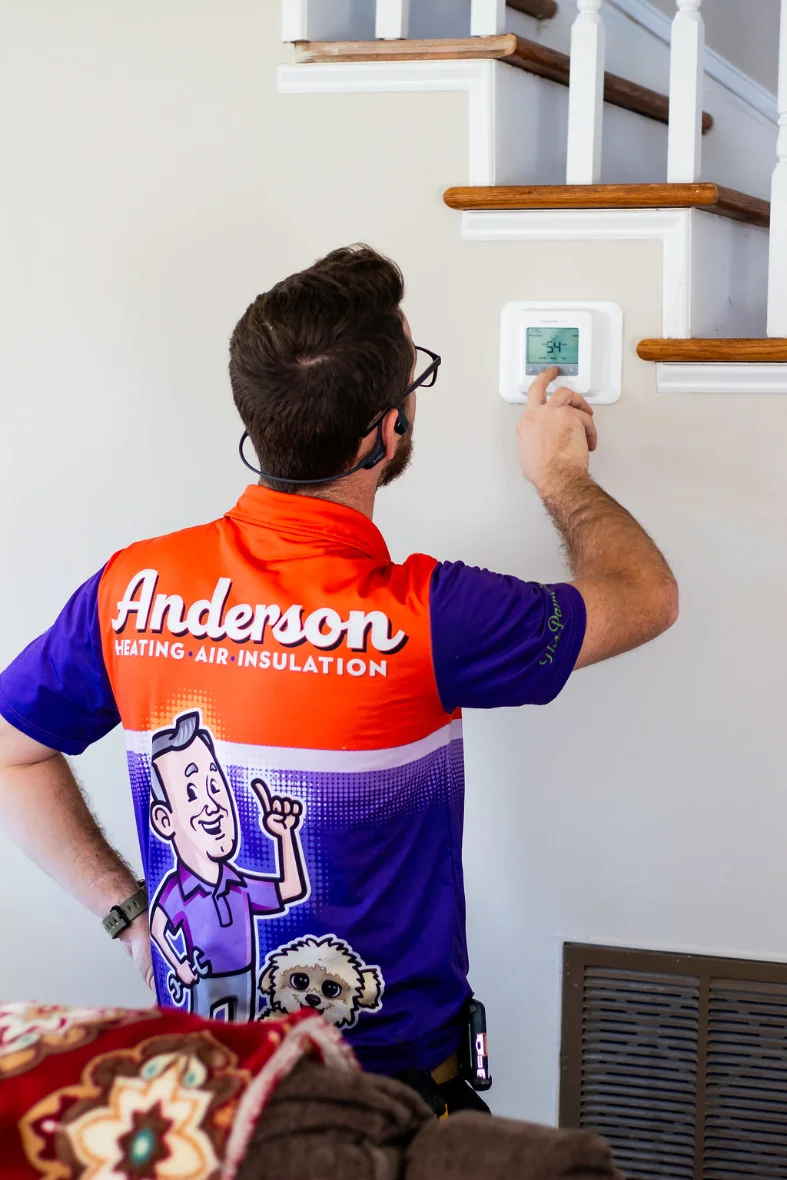
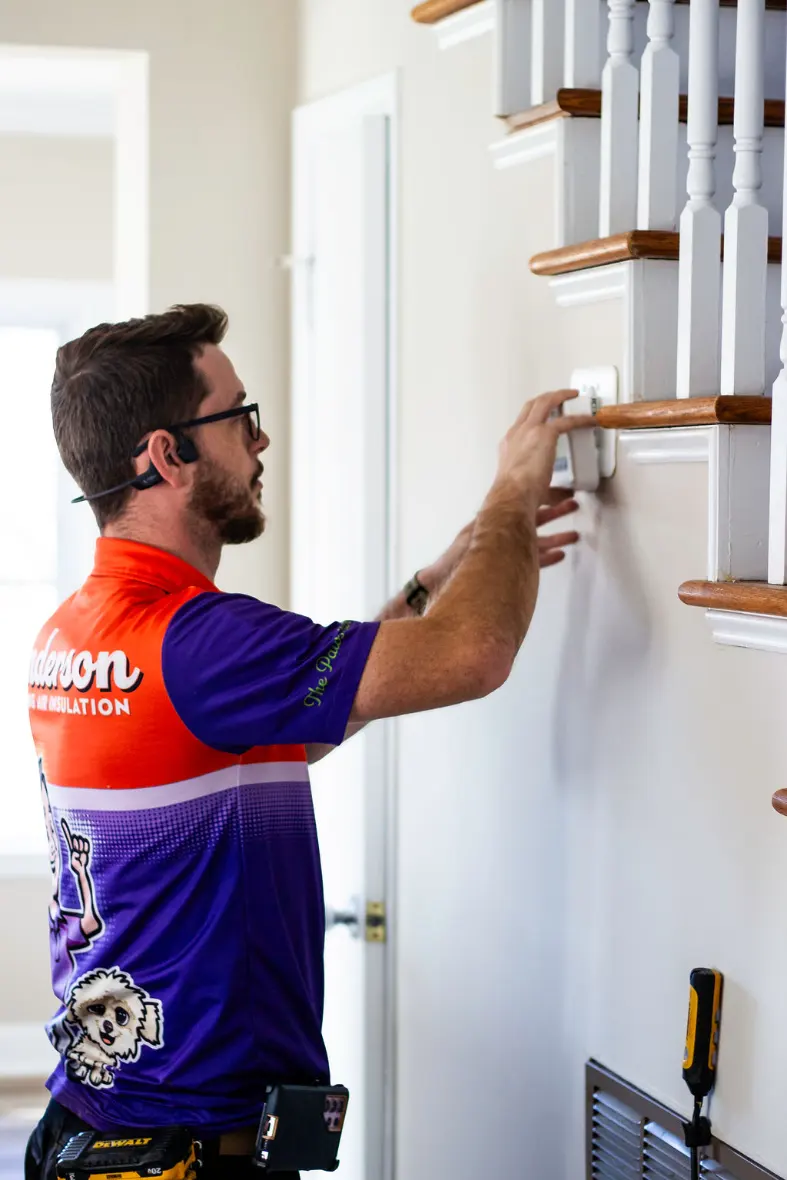
- The thermostat. Make sure it's set to Heat, not Cool or Emergency Heat, and that the set temperature is above the room temperature.
- The air filter. A clogged filter starves airflow. Replace it if it's dirty.
- The breaker. Reset a tripped breaker only once. If it trips again, leave the equipment off and call.
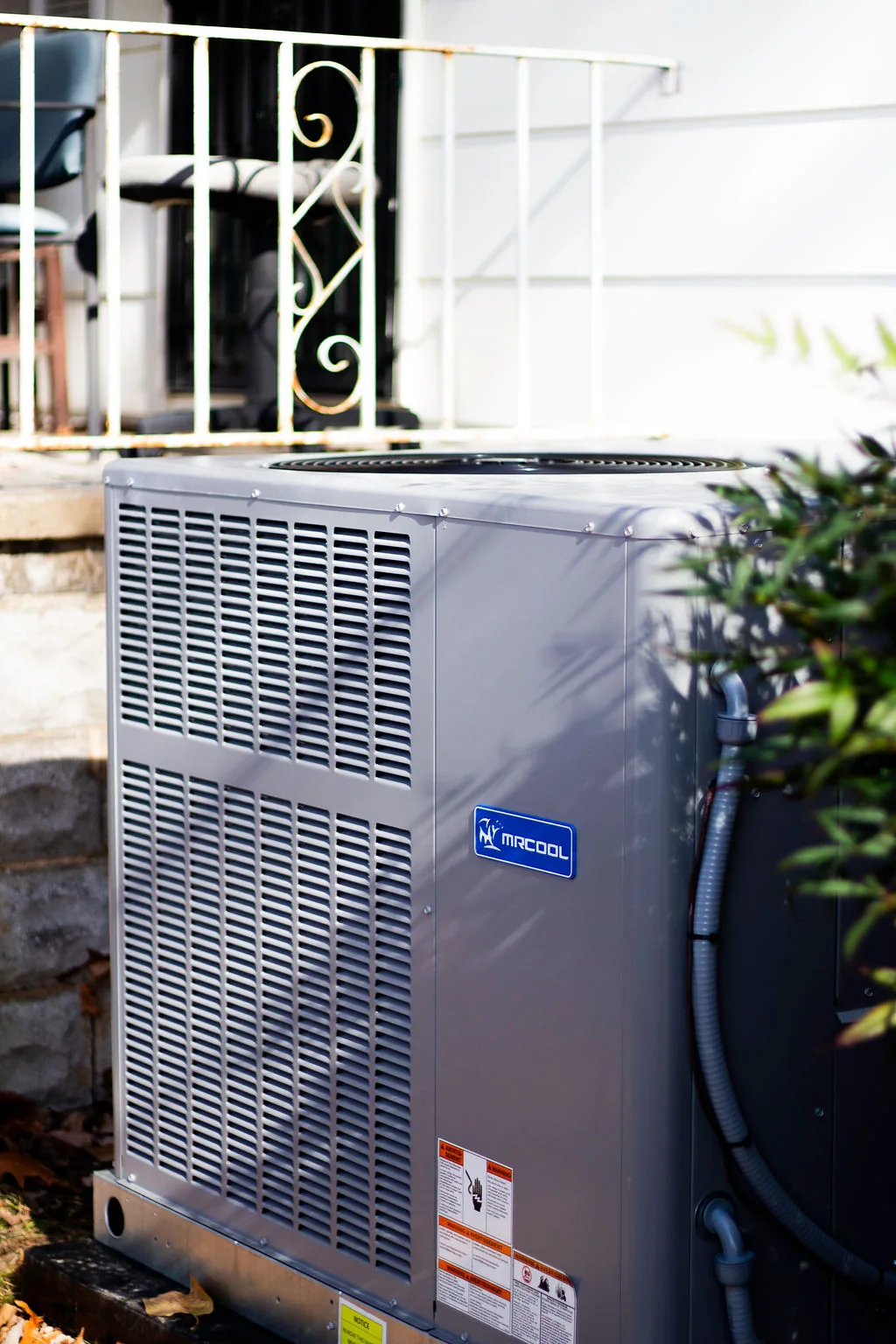
- The outdoor unit. Keep leaves and debris away from it so air can move through the coil.
Don't chip at ice on the outdoor unit with tools. The coil is easy to damage. If the unit is encased in ice, switch the thermostat to emergency heat and call.
Why measuring beats guessing
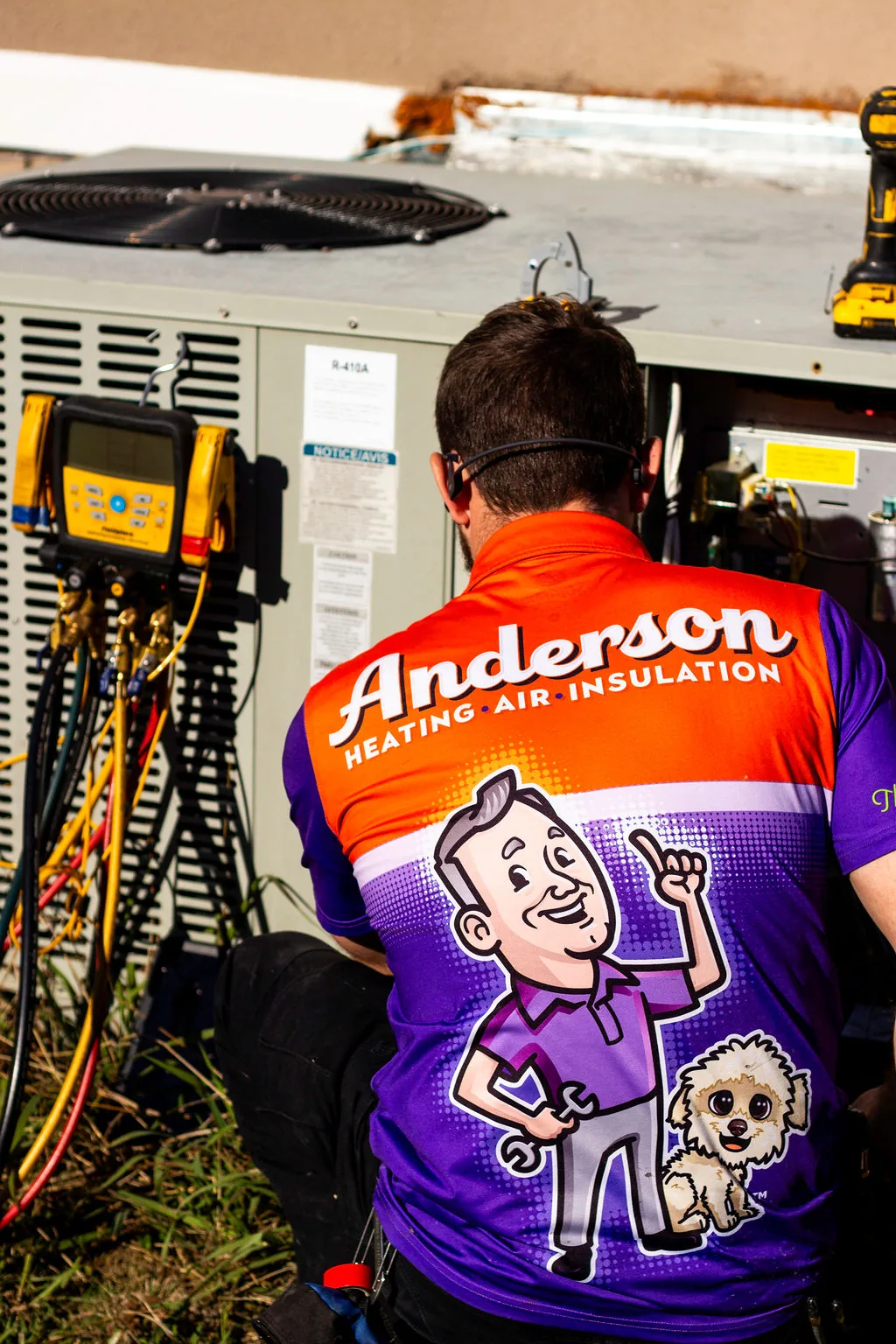
We confirm a low charge by measuring pressures, not by topping it off blindly, and we measure airflow because ducts leaking heat into the attic can make a working heat pump seem weak. Anderson is a building-science company with six blower doors and six duct blasters. That's how we prove whether a struggling heat pump is the equipment or the ductwork, and we repair first, replacing only when the numbers say so.
See heat pump repair in Calhoun, or the same service from our Dalton and Rome offices. If the system is older and repairs keep coming back, read about heat pump installation and replacement.