

Most no-heat calls are a repair, not a replacement, and a few of them turn out to be something you can fix in two minutes. Here is what to check, in order, and when to stop checking.
First: when to skip the checklist
Some situations are not do-it-yourself. Stop and get help if any of these apply:
- You smell gas, or a carbon monoxide alarm is sounding. Get everyone outside first, then call 911 or your gas utility from outside the house. Don't flip switches or restart the system. Call us once everyone is safe.
- You smell something electrical or burning. Turn the system off at the thermostat. If it smells electrical, switch off the breaker to the unit and leave it off.
- The breaker has already tripped more than once. Repeated resets can increase damage and fire risk. Leave the equipment off.
- It's freezing outside and someone vulnerable is at home. With babies, older family members or anyone with a medical condition in the house, don't wait on a checklist. Call for emergency HVAC repair in Calhoun, or see how our emergency line works across Northwest Georgia.
1. Check the thermostat
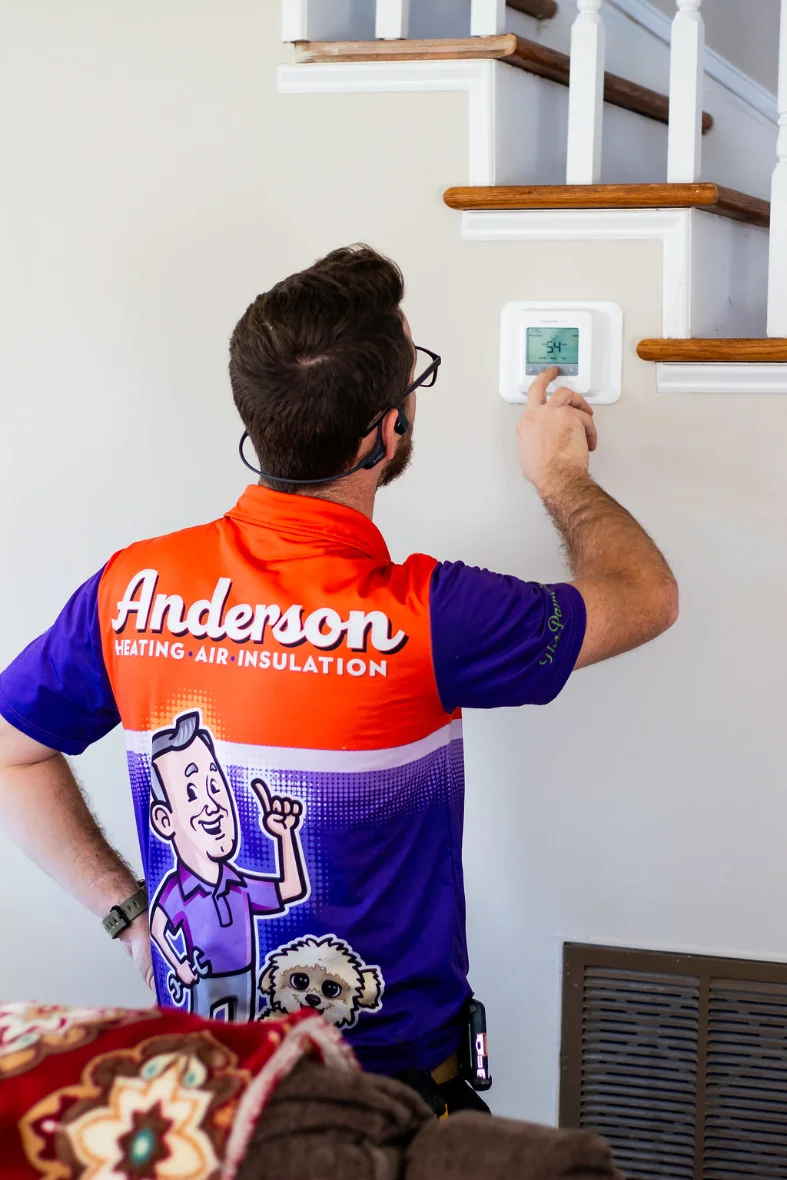
It sounds too simple, but start here. Make sure the thermostat is set to Heat, not Cool or Off, and that the set temperature is above the room temperature. If the screen is blank or dim, replace the batteries. If you have a programmable or smart thermostat, confirm it's actually calling for heat. If the thermostat itself is the problem, see thermostat repair and installation.
2. Check the breaker, once
Look at your electrical panel for a tripped breaker on the furnace, air handler or heat pump. A breaker that tripped once can be reset. Reset a breaker only once. If it trips again, leave the equipment off and call. A repeat trip can indicate an electrical fault, a failing motor, damaged wiring or an overloaded circuit, and it shouldn't be reset over and over.
3. Check the air filter
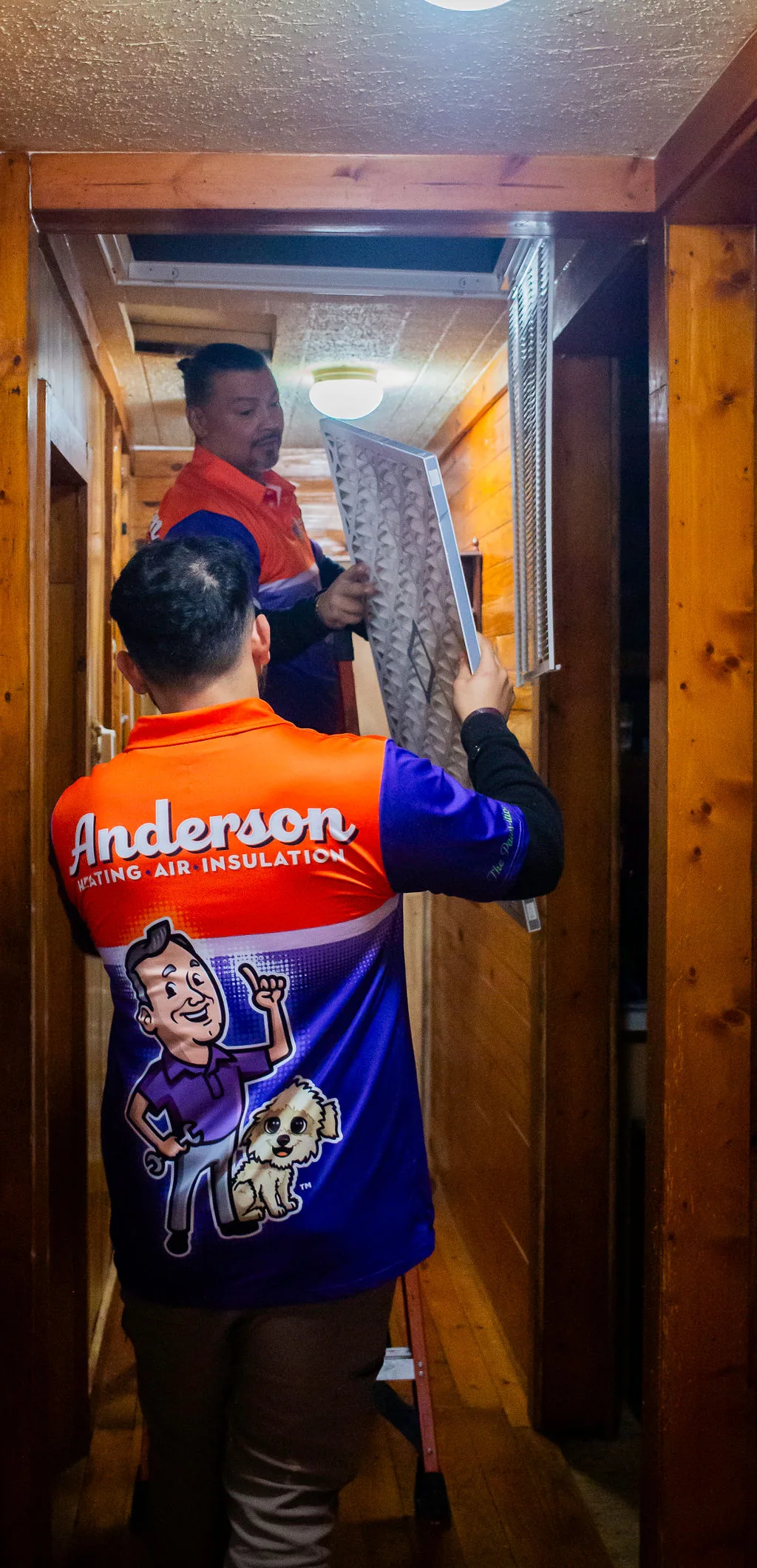
A clogged filter starves the system of airflow. On a furnace, that makes it overheat and trip its high-limit safety, so the fan runs but the air isn't warm. Pull the filter and look at it. If it's grey and clogged, replace it and give the system a few minutes before you try again. A clogged filter is behind a surprising share of the breakdowns and high bills we see, and it's often the cheapest fix there is.
4. Check the vents and returns
Walk the house and make sure the supply vents are open and the return-air grilles aren't blocked by furniture, rugs or boxes. Clear the area around the furnace too: it needs clearance and clean combustion air. If some rooms stay cold while others are fine, the problem may be heat that isn't moving, often ductwork leaking it into the attic, rather than the equipment itself.
5. If you have a heat pump, check whether it's defrosting
A heat pump's warm air feels milder than a furnace's even when it's working, and it blows cool air for a few minutes during a normal defrost cycle. Light frost on the outdoor coil in cold, damp weather is normal, and you may see steam when the unit clears it. That isn't a breakdown. A unit encased in solid ice, one that never defrosts, or truly cold air for long stretches is a fault worth fixing. More on that in our guide to a heat pump blowing cold air or stuck on emergency heat.
Still no heat? Here's what happens next
If the five checks don't bring the heat back, it's time for a diagnosis. On a furnace the common causes are a failed ignitor, a dirty flame sensor, restricted airflow or a tripped safety. On a heat pump it's often a low charge, a reversing valve or a defrost issue. We measure the real cause before we touch a part. Every repair visit starts with an $89 diagnostic, waived when you choose a repair or install option, and you get the price before any work begins.
While you wait, layer up, close off unused rooms and keep space heaters well away from anything that can burn. Then call for heating repair in Calhoun, furnace and heating repair in Dalton or furnace and heating repair in Rome.